Context
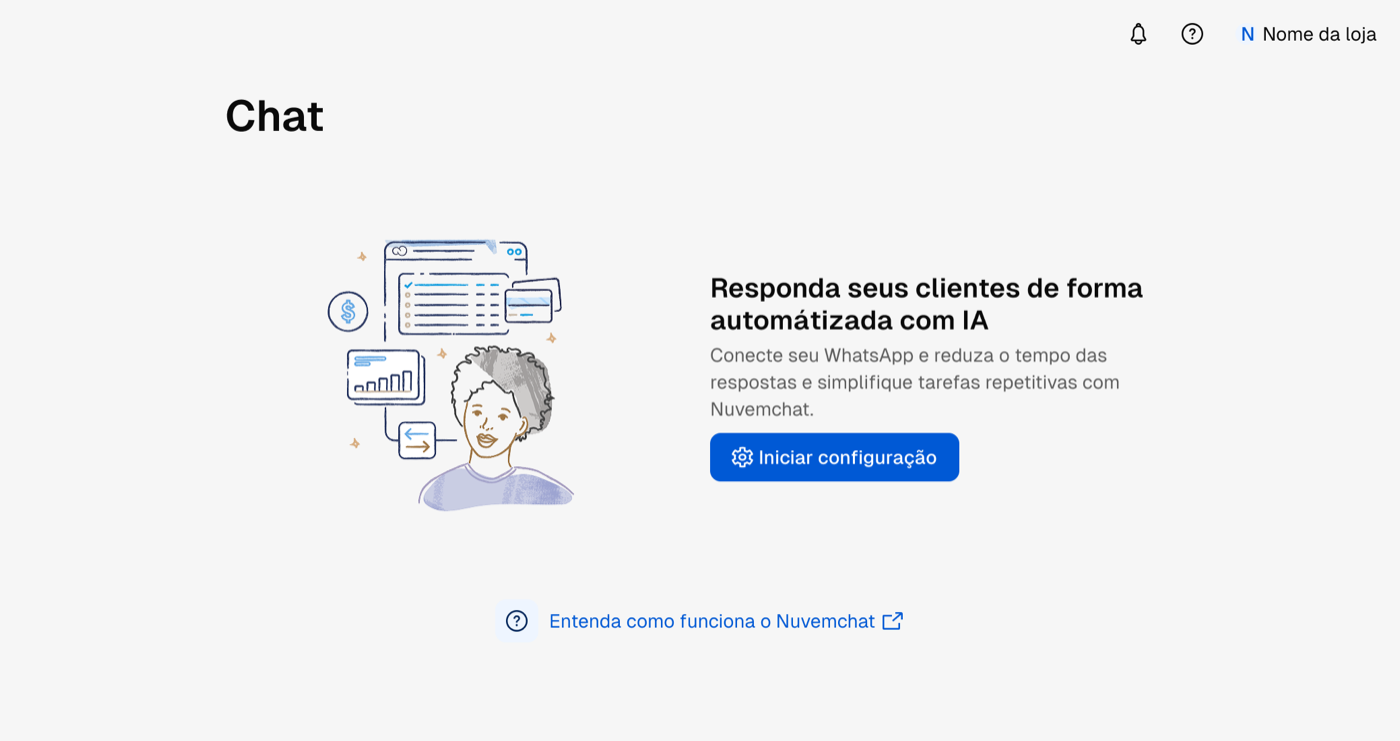
Nuvemshop is Latin America's largest e-commerce platform. I joined as Product Design Specialist for AI, working with a team in Argentina. Nuvemchat was in test: an AI assistant that answers a store's customers on WhatsApp and Instagram, using what it knows about the store and its products.
Merchants liked the demo. The assistant was smarter than the step-by-step chatbots they had used before, and it already knew their store. The trouble started after the sale.
What the research said
I ran semi-structured interviews in Spanish with seven merchants: one close to canceling, three who had paused the assistant, two still setting it up, and one who recommended it to others.
- Setup felt easy, but only because someone from sales did it with them.
- Merchants expected to tune the assistant little by little, as real customers asked real questions.
- After turning it on, most of them opened every conversation to check what the assistant was saying. Seeing was believing.
- When something was off, they called sales again, or paused the assistant.
- They couldn't find settings on their own, so sales ended up as tech support. That doesn't scale.
What I designed
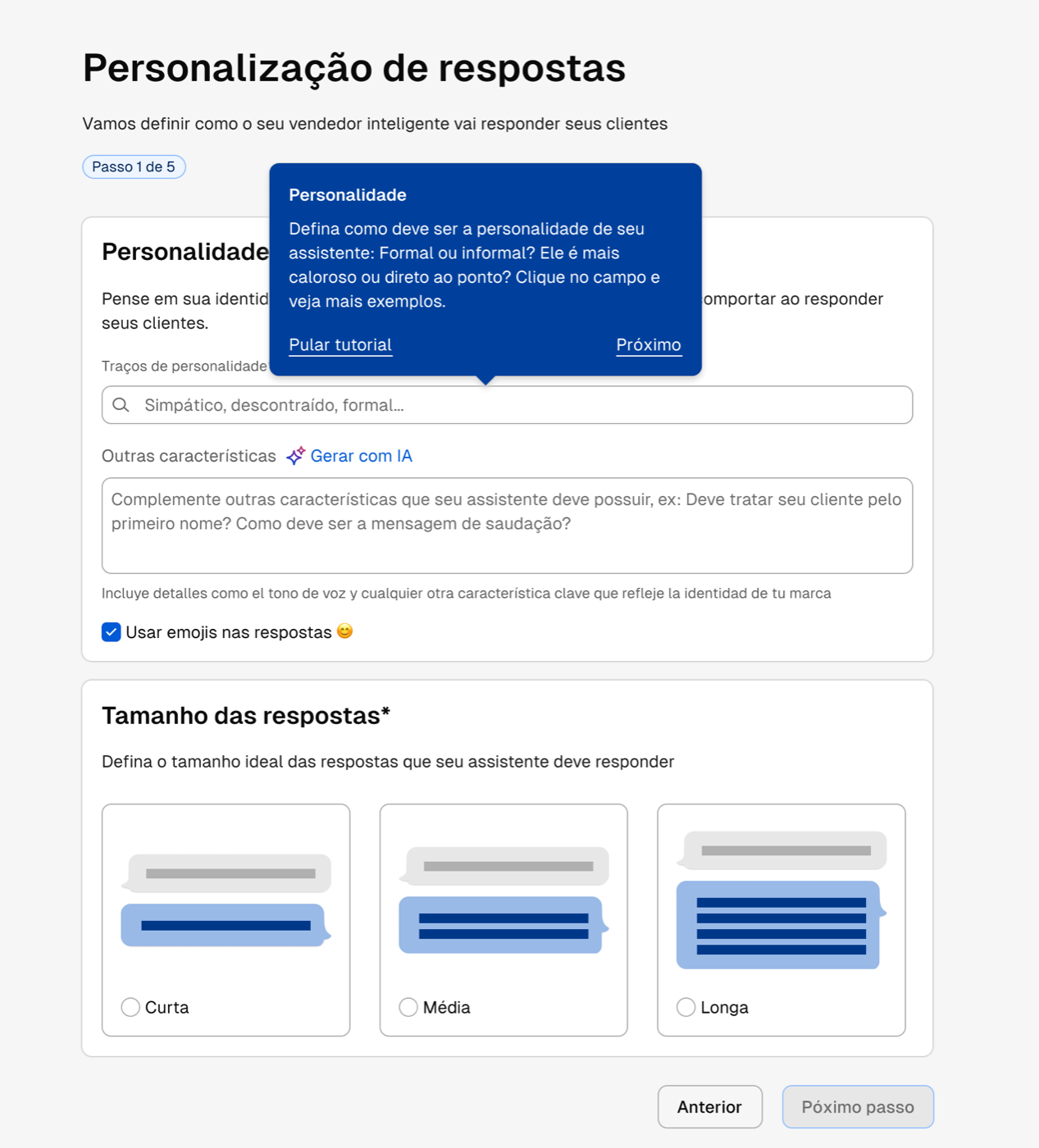
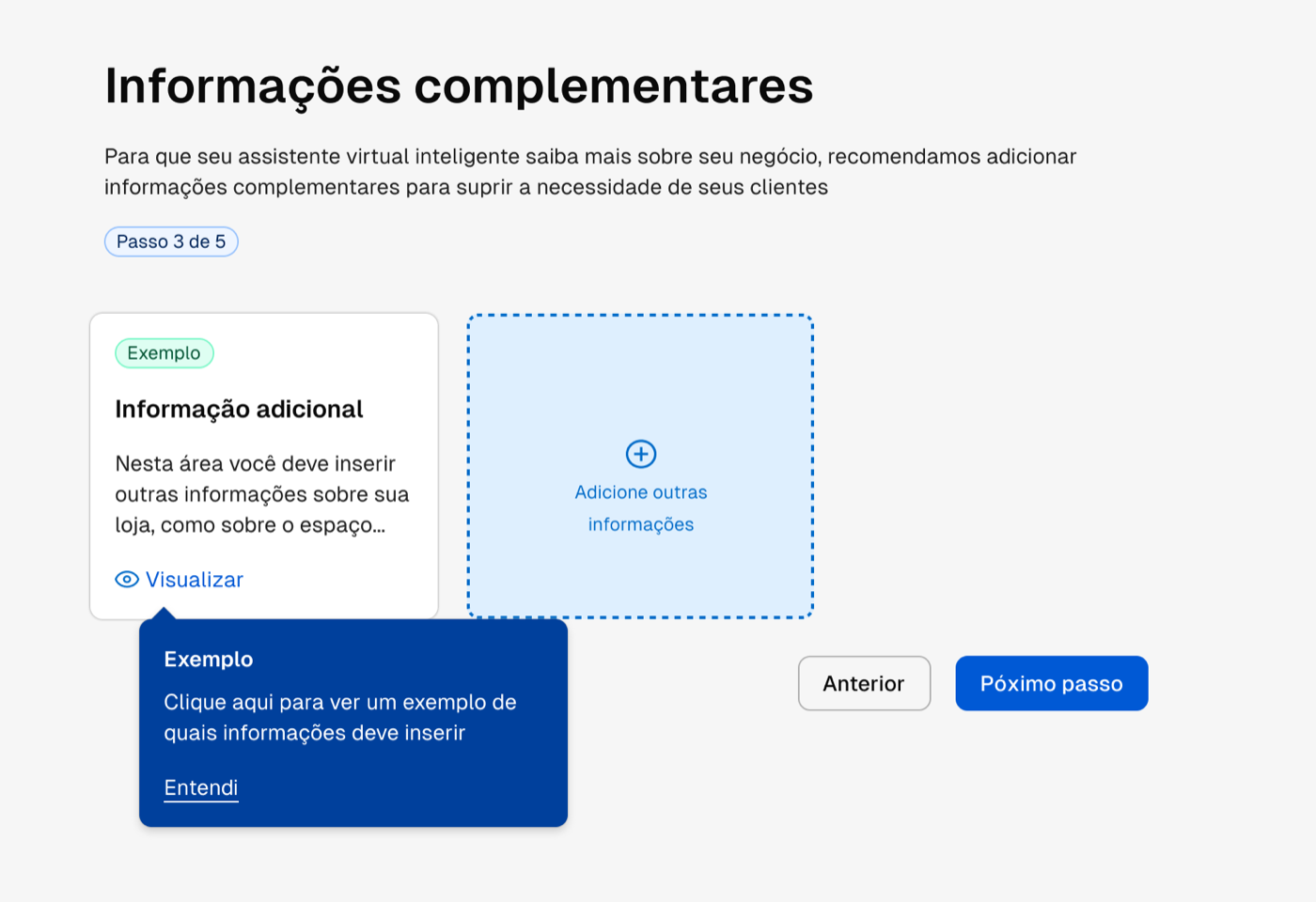
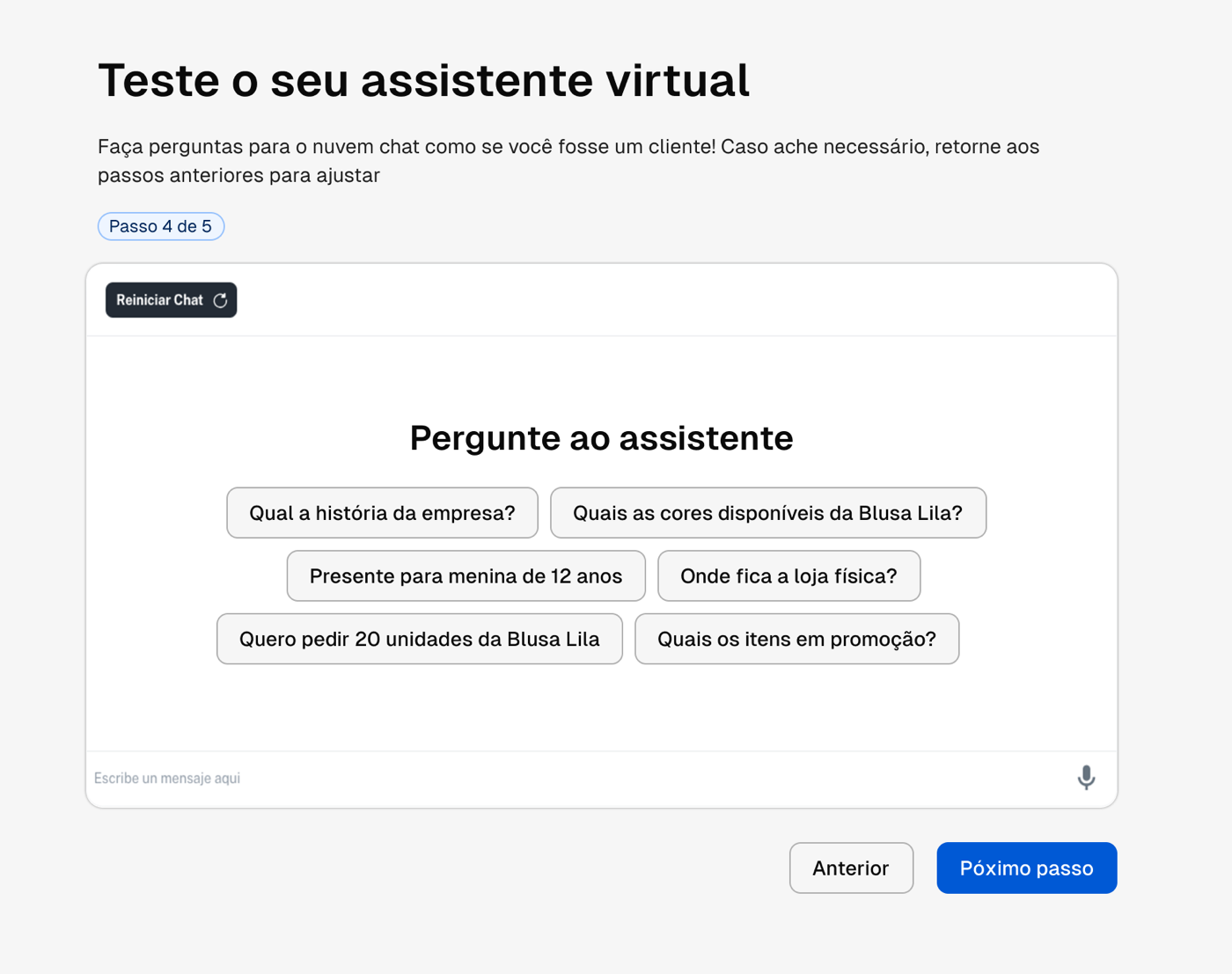
A five-step setup inside the store admin, with a short tip on each step for first-timers:
- Personality. Traits like friendly or formal, other details in the merchant's own words (with a "generate with AI" shortcut), emojis on or off, and how long answers should be.
- Product information. Permission for the assistant to use the store's catalog.
- Extra information. Store hours, shipping, payment, returns. An example card shows what good information looks like.
- Test. The merchant chats with the assistant as if they were a customer, with suggested questions, and goes back to adjust anything.
- Connect. Only then, WhatsApp.
After setup
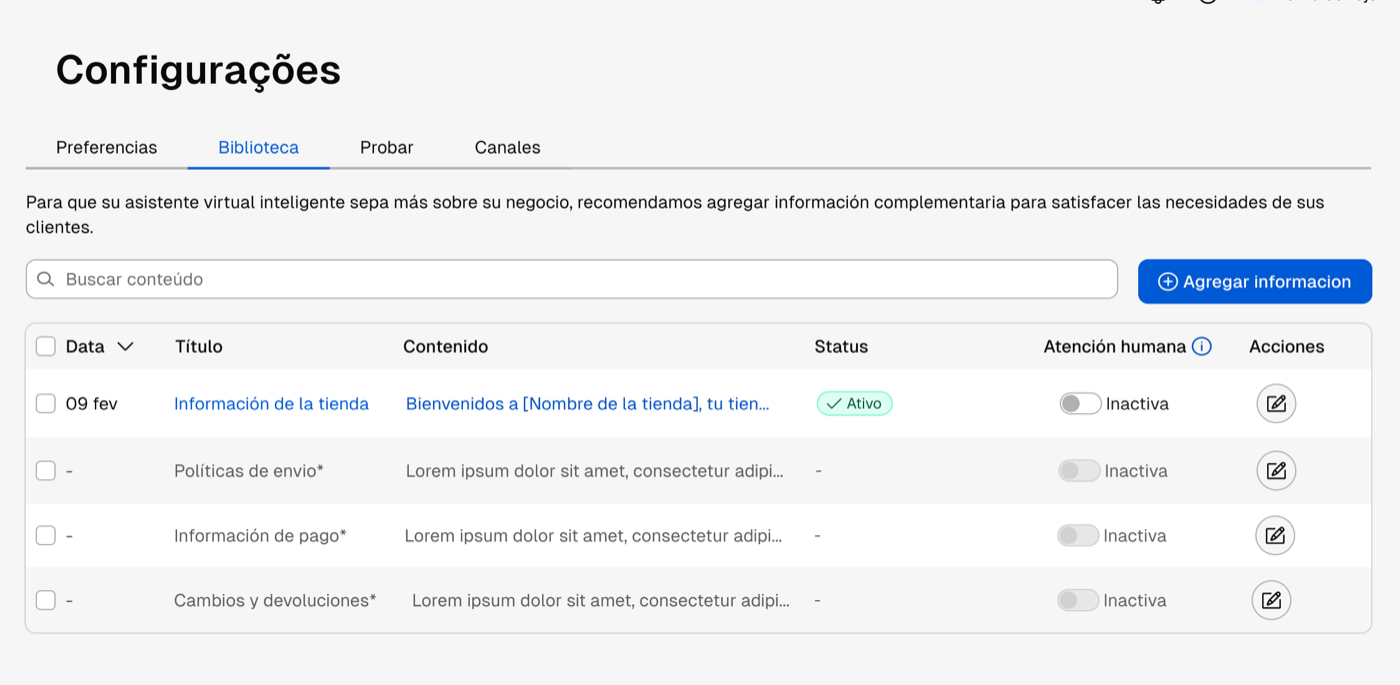
The research showed that tuning never stops. So everything from setup lives on in settings, in four tabs: preferences, library, test and channels.
The library holds what the assistant knows about the store, topic by topic. Each topic has a human attention switch: the merchant decides which subjects, like returns, should always go to a person.